
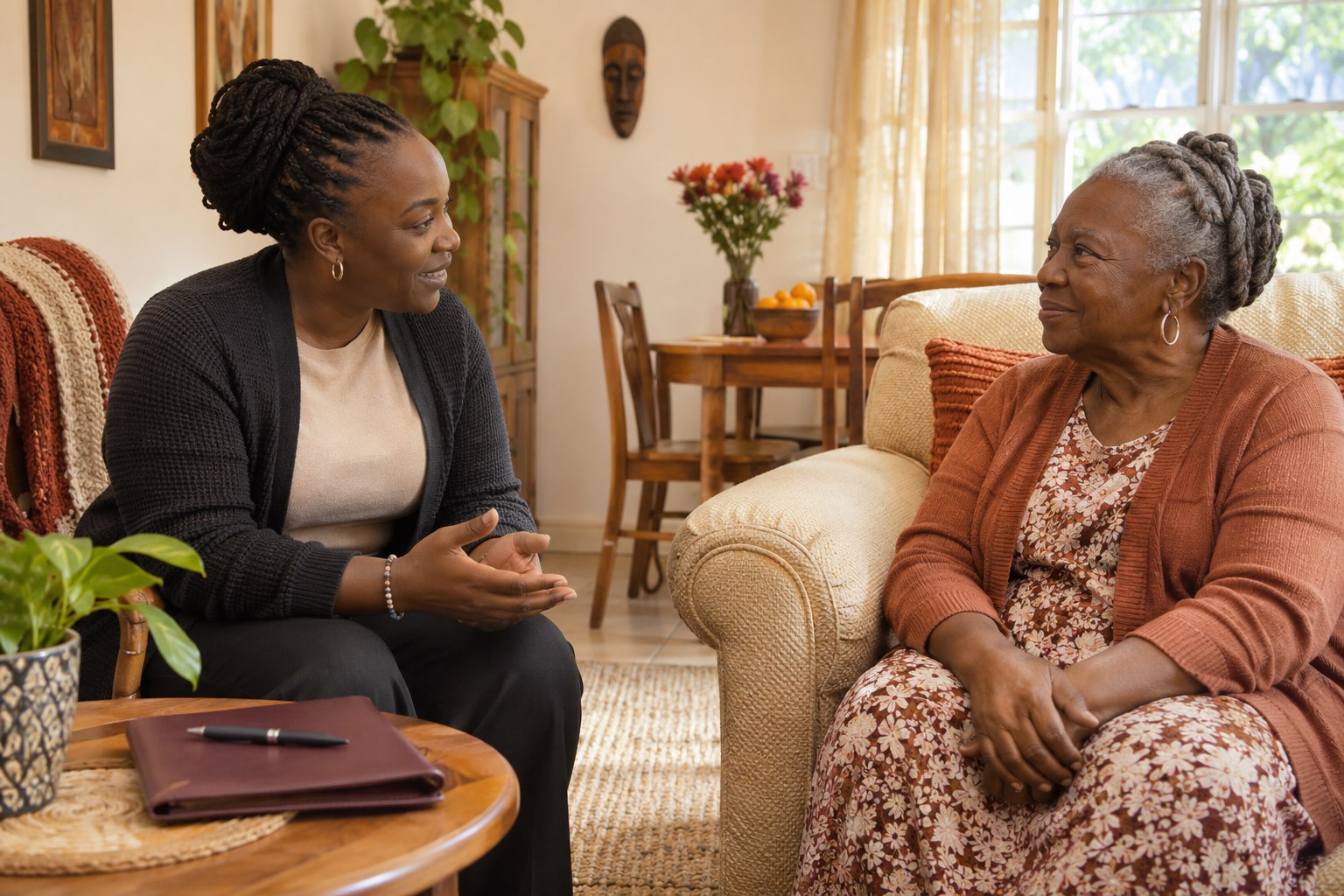
The person comes before the paperwork
Care-related administration is about supporting a person, not simply completing a form. A good learning exercise starts by asking how an individual prefers to communicate, what matters to them and how information can be recorded respectfully. Listening and clear language are as important as a well-organised folder.
GCA’s Higher Certificate in Home Care Operations and Client Support Administration, Tessmora Professional Standard, brings care-related operations and client support administration into one eight-module syllabus. Prospective learners can read the complete course outline and entry guidance on the programme page.
Make a handover understandable
For classroom practice, use a fictional scenario and write a brief handover that distinguishes observations from assumptions. Include the relevant time, the agreed task, what was completed and what still needs attention. Ask a fellow learner whether they can understand the account without needing the writer to explain it.
The purpose of the exercise is clear communication, not diagnosis. Actual records and handovers must follow the organisation’s approved procedures, confidentiality requirements and the worker’s authorised responsibilities. A course exercise is not a substitute for supervision or workplace guidance.
Build practical habits within the right boundaries
Professional learning can help a person become more organised, attentive and confident about asking questions. It should also make the limits of a role clearer. Where a situation falls outside a worker’s training or responsibility, the appropriate next step is to use the organisation’s designated support or escalation process.
This programme does not itself confer a nursing or other clinical licence, and it does not establish eligibility to practise in every country. Before accepting a role, check the employer’s requirements and any applicable local qualification, registration or supervision rules.